Venezuela

Country context

Venezuela continues to face a Complex Humanitarian Emergency that has persisted for over eight years, with deep and sustained impacts on the population. While some macroeconomic indicators show signs of stabilization, humanitarian needs remain critical: more than 7.6 million people (1 in 4 nationwide) require humanitarian assistance (HRP 2024), primarily due to limited access to basic services and livelihood opportunities.
This situation is driven by multiple factors, including institutional fragility, ongoing socio-economic challenges, and increasing exposure to disaster risks—particularly those linked to extreme weather events. Although the growth in the number of people in need has slowed somewhat, the scale of the crisis remains significant. Venezuela continues to represent one of the largest humanitarian situations in Latin America and the Caribbean, while also being at the center of one of the world’s largest displacement crises, with over 7.7 million refugees and migrants as of May 2024. Of these, 6.5 million are currently hosted in countries across the region.
The humanitarian response in Venezuela faces major operational and financial challenges. According to OCHA, as of 30 November 2024, only USD 221 million had been mobilized, covering just 36% of the Humanitarian Response Plan. In 2025, Venezuela has the most underfunded humanitarian plan in the world, highlighting a significant gap between identified needs and available resources. Despite these constraints, by February 2024, more than 791,000 people (57% women) had received humanitarian assistance across 262 municipalities in all 24 states.
In this complex context, limited access to public information and the lack of independent assessments make it difficult to plan evidence-based responses. The fragmentation and lack of coordination in humanitarian information management restrict the ability of actors to make informed decisions, weaken the coordination of effective responses, and hinder essential advocacy to raise visibility and prioritize humanitarian needs in international forums. As a result, inequalities in resource allocation and coordination efforts persist, exacerbating the situation of an already highly vulnerable population.

Jeffrey Villaveces

Regional Director LATAM

Xitong Zhang

Project Manager EVIDEM Consortium

Ongoing Projects

EVIDEM

Evidence-based decision-making (EVIDEM) Consortium in Venezuela

Objetive

Strengthen evidence-based decision-making in the humanitarian response in Venezuela through support in the production of reliable and accessible information products, and by enhancing the technical capacities of civil society organizations. The project, implemented by 3iS within the EVIDEM consortium, aims to provide tools, analysis, and timely data that enable humanitarian actors to respond in a more coordinated, efficient, effective, and people-centered manner.

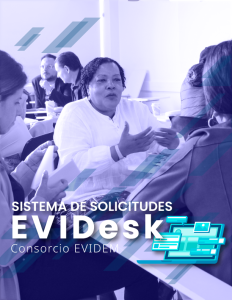
EVIDesk

EVIDesk is a platform designed to efficiently manage service and product requests submitted by humanitarian actors who are part of the Humanitarian Country Team in Colombia.
The system enables real-time tracking of each request through a unique ticket number, ensuring traceability, transparency, and timely responses.

It also supports the evaluation of service use and relevance, contributing to more informed and coordinated decision-making.

It also supports the evaluation of service use and relevance, contributing to more informed and coordinated decision-making.

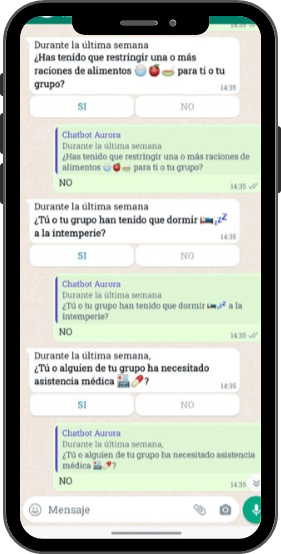
LINA Chatbot

Chatbot for people affected by gender-based violence in the state of Sucre, Venezuela.

LINA is a chatbot designed to prevent gender-based violence (GBV) and complement the work of humanitarian organizations through the use of accessible technology. Its purpose is to use Artificial Intelligence (AI) and deterministic models to identify profiles of vulnerable populations, provide key and timely information on care pathways and available services, and offer digital training on GBV and the risks associated with migration.
Through these actions, LINA seeks to strengthen the protection of vulnerable populations in the state of Sucre, Venezuela, against gender-based violence.
Objetive
Contribute to the prevention of gender-based violence (GBV) and the reduction of risks associated with migration through the use of accessible technology, providing key information, awareness-raising, and guidance to people in vulnerable situations, especially women, adolescents, and migrants.

Key elements

Approaches:

prevention of gender-based violence, reduction of migration risk, digital accessibility, gender-sensitive approach, characterization of vulnerable populations.

Implementation channel:

WhatsApp, available 24/7, with a secure and anonymous interface.

Contents:

Four-module course on gender-based violence.

Videos, infographics, and interactive maps with available services.

Virtual assistant with accessible and inclusive language.

Priority population:

women, adolescents, migrants in high-risk areas (Sucre).

Key partnerships:

Diakonie Katastrophenhilfe and local implementing organizations (state of Sucre, Venezuela).